Most people picked up an AI tool and handed over their voice with it. The content kept coming, the personality stopped. If you've noticed your feed starting to sound like one long press release written by a committee that's never met, you're not imagining it. At What IF Web, a Webflow Premium Partner based in Christchurch, New Zealand, we use AI every day and we've had to think hard about where it helps and where it just makes you sound like everyone else. The short answer: AI handles the execution. You handle everything that makes the execution worth reading.
What happens when AI speaks for you
Lose your personality and you end up sounding like everyone else, and that is just boooooring. People are talking from an AI output and aren't saying how they truly feel. This has slowly flooded into everything you see in a day. Social media, video content, websites, advertising. Did someone say dead internet theory?
The tool is supposed to help you, not speak for you. Take some time to read this and get to know what can help you show off you.
The stories AI can never tell
Real experience is the one thing AI can't replicate. There's a line from Good Will Hunting that keeps coming back. Robin Williams is sitting next to a young genius who knows everything and understands nothing, and he says: "I'd ask you about love, you'd probably quote me a sonnet. But you've never looked at a woman and been totally vulnerable." That's how a lot of AI content feels. All the words, none of the weight.
When something significant happens in your journey, tell it in a way that makes people lean in. People care about how you got from A to B. Sharing that builds trust, shows personality, and brings people closer. AI can be briefed, but it can't feel the struggle or the win. That part is yours.
The 10/80/10 split: how we use AI without losing our voice
10% you at the start, 80% AI in the middle, 10% you at the end. That's the framework we use at What IF Web, and it's the difference between AI-assisted content and content that sounds like it was written by AI.
The opening 10% is the thinking. Before you touch ChatGPT or Claude, write down who this is for and the one point you want to land. If you can't write those lines, AI can't save the piece. It'll just produce a longer, smoother version of "I don't really know what I'm saying."
The 80% in the middle is execution. Hand AI the brief plus your brand guide and let it draft. Don't ask for "a LinkedIn post about AI writing." Ask for the post you just briefed.
The closing 10% is cleanup. AI hallucinates, invents stats, and slips in phrases you'd never use. Read every line out loud. If a sentence sounds like a press release, rewrite it. If a claim sounds suspicious, check it. (Most slop online is what happens when someone skips this step.)
A few things that help keep your voice consistent when working with AI:
- With Claude you're able to build projects and skills to give AI a set of instructions that it will execute every time you use that project
- Those instructions could be anything from attaching your brand writing guide, down to past posts where it can feel how you write
- Follow up with specifics: avoid AI-esque phrases, no unnecessary dashes, no hollow openers. Add whatever matters to your voice
AI can be treated as an assistant but it should never replace you. It works behind the scenes while you build something greater.
Why is being human a competitive advantage on LinkedIn?
LinkedIn is still an underrated place to build a community, and being a person is genuinely the best strategy going right now.
People in business and tech are surprisingly supportive, and whether you're commenting on someone's post or they're commenting on yours, the conversations tend to be genuine.
You don't make friends with robots. You don't make friends with robots.
Nobody scrolls LinkedIn hoping to read another AI-generated take on what Q3 taught someone about resilience, booooooorrrrring. LinkedIn was already a bit hollow before AI showed up, and using AI to write more of it just turns the volume up on the hollow part. If everyone's posting the same airport-bookshop wisdom in the same neat three-bullet format, nobody's saying anything, and it hurts your brand.
The easiest way to not look like a bot is to show up like a person and be yourself.
Post about the project you're stuck on. Share the thing you tried this week that didn't work. Have an opinion about something happening in your industry that isn't the same opinion everyone else is having. Feed the ducks and post a photo.
Yeah, it's a bit awkward at first and can feel out of place. But people respond to people. Most of LinkedIn is just people trying to look productive at work, and scrolling is a great cover for that, so a bit of humanity in the feed is a relief, not a disruption. Nobody really wants "5 lessons I learned from losing a client." Trust gets built one ordinary post at a time, and then one day someone you've never met sends through a referral because they've been quietly reading along.
Why do you need people who will question you, not tools that won't?
AI is a neutral and agreeable tool. It won't tell you that you are wrong, it will just alter it and say try this. You need someone who will question you. We all have blind spots, and the people in your corner are the ones who push the uncomfortable.
Accountability is another thing AI doesn't provide. Sometimes building knowing someone is watching pushes you that extra bit further and forces you to be accurate. The relationships that push you to be better are often uncomfortable short term but valuable long term.
Diamonds are made under pressure.
The human era is just beginning
With AI becoming more and more powerful, humans are going to crave more human interaction. People are going to become more sought after, not less. Stay true to what you stand for, and if possible in your workflow use AI to assist you, not replace you.
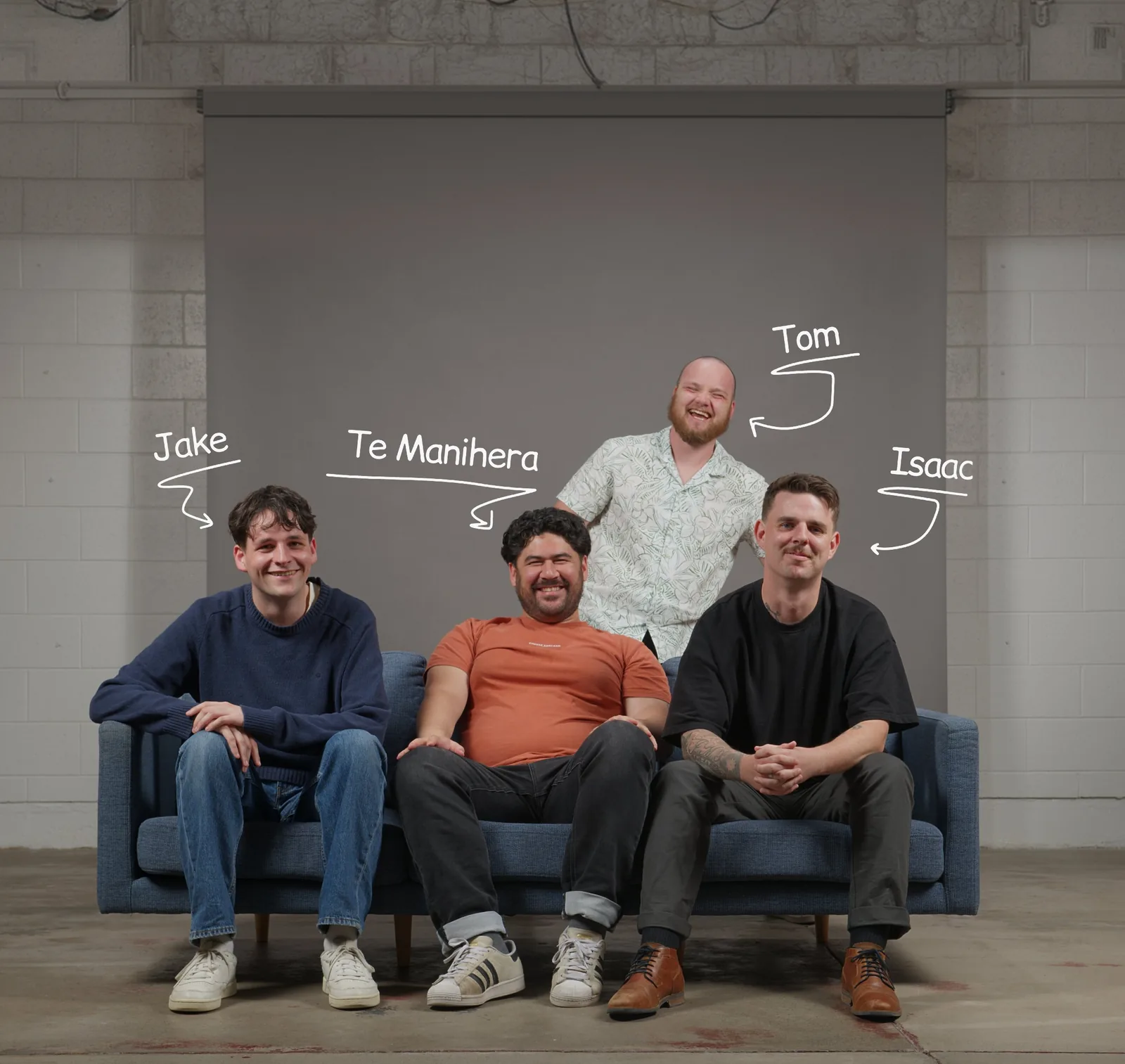
AI isn't going anywhere and it will become more capable, but it will never take your identity. So keep growing those connections and interactions. People don't remember the perfect, they remember the flaws, and us as humans are full of flaws. That is not a bad thing. The most valuable thing you have isn't your skill or your tools. It's you.
.webp)