When you need both brand and website work, the question is whether to hire one studio that does both or split the work across a specialist brand agency and a specialist web agency. One studio is usually cheaper and faster because the coordination work doesn't happen twice. Two specialist agencies usually do each half deeper, but you pay for the time it takes to translate brand guidelines into web decisions and the overhead of coordinating two teams.
This guide covers the six questions NZ businesses ask when choosing between one studio and two agencies:
- When does one team for brand and web make sense?
- What does a combined brand and web project look like?
- Is it cheaper to use one studio for both?
- What's the risk of splitting brand and web across two agencies?
- How do timelines compare: brand then web vs both at once?
- When should you use separate specialists instead?
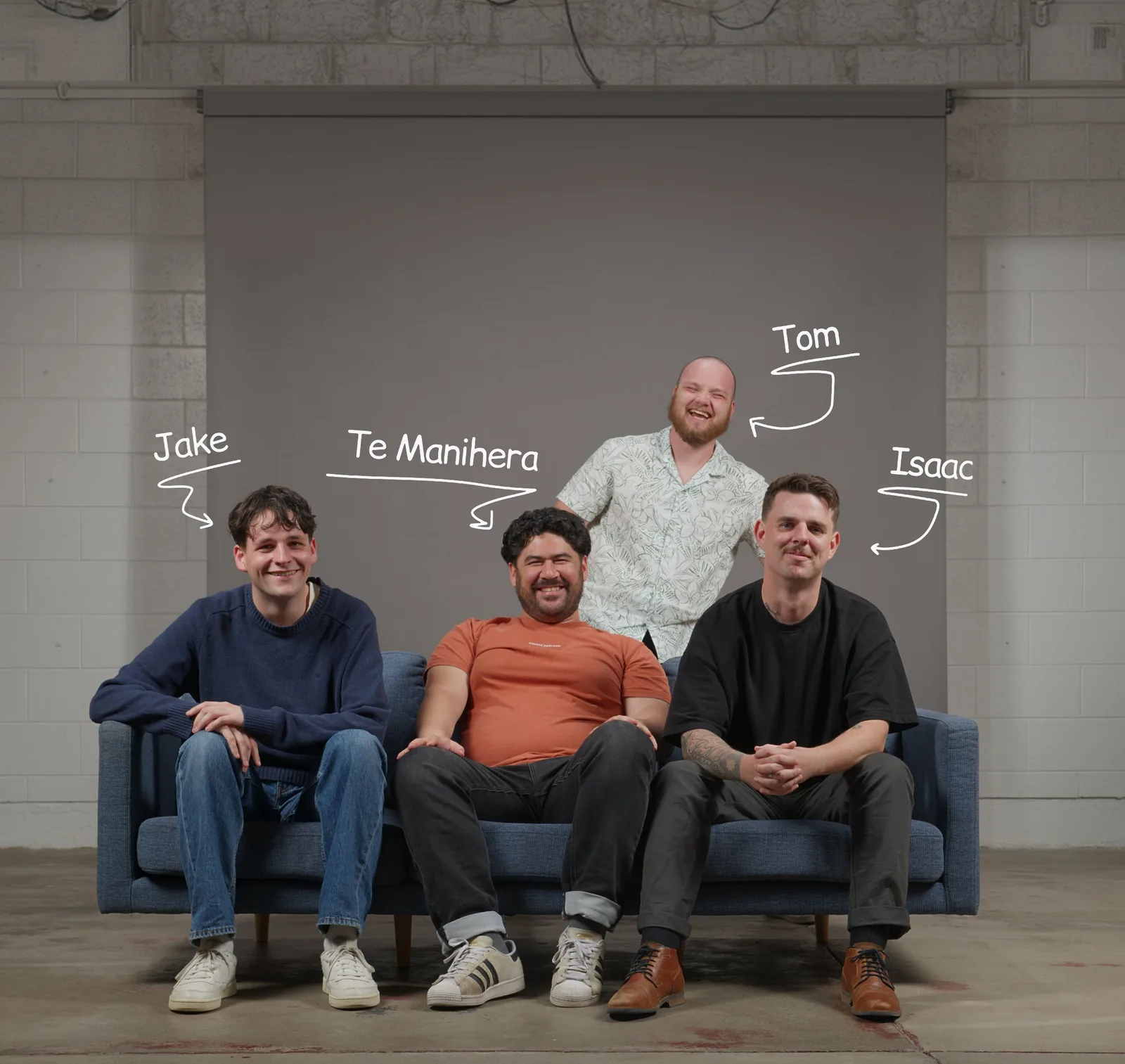
What IF Web is a Christchurch creative studio and Webflow Premium Partner that runs combined brand and web engagements as one project with one team. Thomas Hendrikz leads design across brand and web, and Isaac Farrow handles client relationships and Webflow development. Both are at the table from the first call.
Combining brand and web, at a glance
Here's how the two approaches compare across the areas that affect the project cost and outcome.
When does one team for brand and web make sense?
The strongest case for one team is when the brand work and the website work are feeding each other. If the brand is new or being refreshed, the website is where most people will encounter it, so the two projects are one project in two phases. Splitting them across two agencies means paying the second agency to interpret the first one's work, and sometimes paying the second agency to fix what the first one didn't think about.
A good answer sounds like: "Here's what a combined engagement includes. On the brand side we cover strategy, plus the logo and the full visual system around it. On the web side: architecture and design, plus the build and CMS setup. One team moves through both, with the brand decisions informing the web and the web requirements informing the brand."
A red flag sounds like: "We'll design the website and then recommend a brand designer afterwards." That means a website design is going ahead on a brand that may not even exist yet, or a brand that could be redesigned shortly after launch. Either way, the project costs more than it needed to.
Ask the studio what their process is when brand and web overlap. If they treat brand and web as two discrete handovers with a formal document between them, they're probably two-agency thinking inside one studio. Our branding in Christchurch page covers how What IF Web approaches a combined brand and web engagement in practice.
What does a combined brand and web project look like?
A combined brand and web project runs as one engagement from scope through to launch, with the same team working on both. The practical difference is that brand decisions are made in the context of where they'll live. The logo is designed knowing it'll be the favicon and the hero element. The colour palette is picked knowing which colours will carry the primary call-to-action button.
The project usually runs in parallel tracks that meet at key moments. Strategy and logo development happen first, since everything else hangs off them. Once a direction is approved, website architecture and brand application happen alongside each other, with design decisions feeding both. Launch happens as one event, with the brand and site going live together.
What the client sees is one streamlined engagement. The kickoff workshop covers both brand and web in a single session. One shared design system in Figma gets referenced by brand and web work. The handover at the end covers both outputs together. From your side it feels like a bigger project, with one team and one Slack channel, instead of two of everything.
At What IF Web, this looks like Thomas running the brand and design side across both brand and web, and Isaac running Webflow development. Both are at the client table across the whole engagement, instead of handing off to the next team mid-project.
Is it cheaper to use one studio for both?
In most cases, yes. A single discovery process covers both outputs instead of two scoping exercises. One project management stream replaces the two agency PMs you'd otherwise pay for. The reconciliation phase where two creative visions get negotiated also doesn't happen, because there's only one vision to begin with.
How much you save depends on the scope. Combined brand and web engagements typically cost less than the sum of the two projects quoted separately. The exact amount varies by project size and complexity.
The bigger financial impact isn't the direct saving. It's that scoping a combined engagement once gives you a single number to decide on, whereas splitting it means two separate quoting exercises, often months apart. For a Christchurch business where someone has to make a go-no-go decision inside a quarter, that difference matters more than the headline saving.
What's the risk of splitting brand and web across two agencies?
The core risk is that the handover from brand to web is where most of the inconsistency problems start. A brand agency's guidelines document is their output, but a web agency reads that document and makes judgement calls about anything the guidelines don't explicitly cover. Those judgement calls add up.
The two things that most commonly go wrong when brand and web are split:
- The brand guidelines don't cover every edge case. Buttons and forms often sit in the gaps, as do loading states and error messages. The web team ends up making brand decisions without a brand team to check with.
- The brand team isn't accountable for what happens after their handover. If the brand doesn't translate cleanly to the website, you're paying the web team to fix decisions the brand team made. You're also paying the web team to coordinate with the brand team if changes are needed.
Colours are a specific example. Colours that look great on a printed brochure can fail accessibility contrast ratios on a website. If the brand team scoped to deliverables and the web team scoped to a working website, the web team ends up fixing colour choices after the brand team has gone.
Ask any studio how they handle brand and web overlap in practice. If they say "we partner with a brand agency", that's a flag the handover risk is live. If they say "the brand and web team is the same team", the handover doesn't exist.
How do timelines compare: brand then web vs both at once?
Running brand and web in parallel with one team usually takes between eight and twelve weeks total. Running brand then web with two agencies typically runs sixteen to twenty-four weeks, because the web project can't start properly until the brand is signed off. That gap between projects is where a lot of momentum gets lost.
The parallel approach works because brand and web aren't fully sequential. The brand strategy and logo direction do need to come first, but the colour and type system can be developed alongside website wireframes. Component design lines up with brand application. By the time the brand guidelines are finalised, the website build is often already underway.
With two agencies in sequence, the brand project runs to completion first. Guidelines get written. Then the web agency starts scoping their project, which is where the handover-review-reinterpret cycle begins. The web agency kicks off with a different team at a different studio. They need onboarding on the brand. The brand decisions they didn't know they'd need to make get surfaced. Each of these steps adds days and sometimes weeks to the overall engagement timeline.
For a Christchurch business where someone has to make a go-no-go decision inside a quarter, parallel is often the only route that fits the deadline. For a larger NZ business with budget flexibility and no urgency, sequence with specialists is a valid alternative.
When should you use separate specialists instead?
There are good situations to go two-agency. If the brand is strategic and involves big positioning changes or M&A activity, a dedicated brand strategy firm will go deeper than a studio that does both. If the website is a complex web app or product site with heavy engineering requirements, a specialist product design firm will go deeper on the engineering side than a creative studio.
There are also situations where combining brand and web under one team doesn't make sense. If you already have an established brand and only the website needs updating, hire a web agency and don't scope brand work. A brand-aware web team is fine when you've got a brand you love and want to protect, as long as you're clear you're not rebranding.
The honest filter is whether you need deep specialist capability on either side. Most SMEs and growing businesses benefit from one team because the depth needed isn't specialist-level. Enterprise projects with complex requirements usually do justify specialist firms, and they can afford the coordination overhead that comes with managing two teams.
About What IF Web
What IF Web is a four-person creative studio in Christchurch, New Zealand, and a Webflow Premium Partner. We've been running combined brand and web engagements since 2022. Isaac Farrow leads client relationships and Webflow development, and Thomas Hendrikz leads the design across brand and web. Both are at the table across the whole engagement, so there's no handover gap between brand decisions and the website they live on. Our tagline, if we must have one, is "Good things happen when you don't do normal."
Our branding and design service and marketing websites service pages cover each side of this in more depth.