Hiring a brand identity designer in New Zealand usually sits in one of three buckets: a freelancer, a boutique studio, or a larger agency, each a step up in price and in what you get for it. Which one fits depends on whether you need a logo or a full identity system, whether a website will land straight after, and how much strategy has to happen before anyone draws anything. The most reliable signal of a designer worth hiring is a portfolio of named clients with real outcomes, and a written process you can see on the page.
Half the branding content online is a list of adjectives dressed up as advice. This one is the practical read: what a brand identity includes, how to pick the right tier of hire, who to shortlist, and the signs you're about to hire the wrong person. We design brand identities at What IF Web as part of our Webflow work, so we have skin in this game and we'll call that out where it matters.
What does a brand identity designer do?
A brand identity designer builds the visual and verbal system that makes a business recognisable. The job covers the strategy underneath (positioning and audience), the logo and its variants, a typographic system, a colour palette, iconography or illustration where the brand needs it, photography direction, and the guidelines that keep the whole thing consistent when other people apply it.
A logo on its own is not a brand identity. It's one component, usually about 10% of the work. If a designer only ever shows you logos, you're hiring a logo designer. That's a different job, usually a cheaper one, and sometimes it's exactly what you need (new business, no team, no budget for a full system). Just know which one you're buying.
What a brand identity does not need to include, despite what some studios will quote for: a 180-page guideline PDF you'll never open, mood boards without decisions behind them, and strategy documents written in a dialect only the strategy team speaks.
Should you hire a freelancer, boutique studio, or larger agency?
Match the hire to the scope and the stage, because the three tiers deliver different scopes of work for proportionally different budgets.
A freelancer is the lightest-cost tier and suits early-stage businesses that need a solid logo and a few applications, done well. You're paying for one designer's time, not a studio's overheads, which is why the invoice is smaller. The risks are capacity (one person, one calendar) and longevity (what happens in two years when you need the source files updated).
A boutique studio is a step up on both deliverables and budget, and suits businesses serious about a rebrand or launching with a proper identity system, with strategy baked in. You're paying for a small team's time: strategy and design as separate inputs rather than one person switching hats. The risk is picking the wrong one, because a nice studio website does not always mean nice studio work.
A larger agency is another step up again, and suits businesses with multiple markets or enterprise stakeholders where complex rollouts need account management. You're paying for a dedicated strategy team and senior creative direction, plus the account structure that keeps a long project moving. The risk there is dilution. The senior people pitch the work, junior designers often do it.
The ranges overlap at the edges: a senior freelancer with a strong book charges studio rates, and a mid-size studio with juniors doing the work can quote at freelance rates. Get two or three quotes against the same written brief before comparing, since every studio prices per project and the real signal is what each one puts in the scope at that number.
| Freelancer | Boutique studio | Larger agency | |
|---|---|---|---|
| Timeline | 2 to 4 weeks | 4 to 10 weeks | 8 to 16 weeks |
| What you get | Logo and basic kit | Strategy, identity system, guidelines | Strategy, identity, rollout, account management |
| Who you deal with | The designer | The designer and a lead | Account team, then designers |
| Best for | Early stage, tight budget | Growing businesses, serious rebrand | Enterprise, multi-market |
| Main risk | Capacity and longevity | Picking the wrong studio | Dilution through layers |
What should you look for in a brand designer's portfolio and process?
Named clients with specific outcomes attached to the work, and a visible process behind both. A portfolio showing "a wellness brand" or "a fintech client" with no name is either hypothetical or came with an NDA that will hide half of what you need to see. Named clients are also checkable, which means you can ring one.
Specific outcomes matter because they prove the work did something. "Rebrand led to a 40% uplift in enquiries" or "launch reached 1.2 million impressions in the first week" is useful. "A beautiful new look that captured the brand essence" could sit under anyone's work and probably has.
Process matters because it shows how the studio thinks. A good one will walk you from a client's business problem through to the final visual system, with the thinking visible at every step. If the case study jumps from brief to final logo with nothing between, the strategy is either weak or hidden. A proper project takes four to ten weeks for most New Zealand studios, a freelance logo project two to four weeks, and a full strategic rebrand with a larger agency three to six months. Anything that promises a logo in a week is skipping discovery, which is where the brand decisions get made.
Should your brand designer also build your website?
Often yes, for practical reasons. Most customers meet a brand on its website first, so the identity gets judged on how it survives translation to the web. A brand studio with no web experience will design past things like colours that fail accessibility checks, typefaces where nobody checked the web licence, logos that break on a phone, and grids built for print bleed rather than a viewport. That leaves the website build quietly rewriting half the brand to make it function.
The alternative is to hire two teams and manage the handoff. It can work if both teams are good and the brand studio understands digital constraints from the start. It usually doesn't, because brand studios without strong web experience default to print thinking.
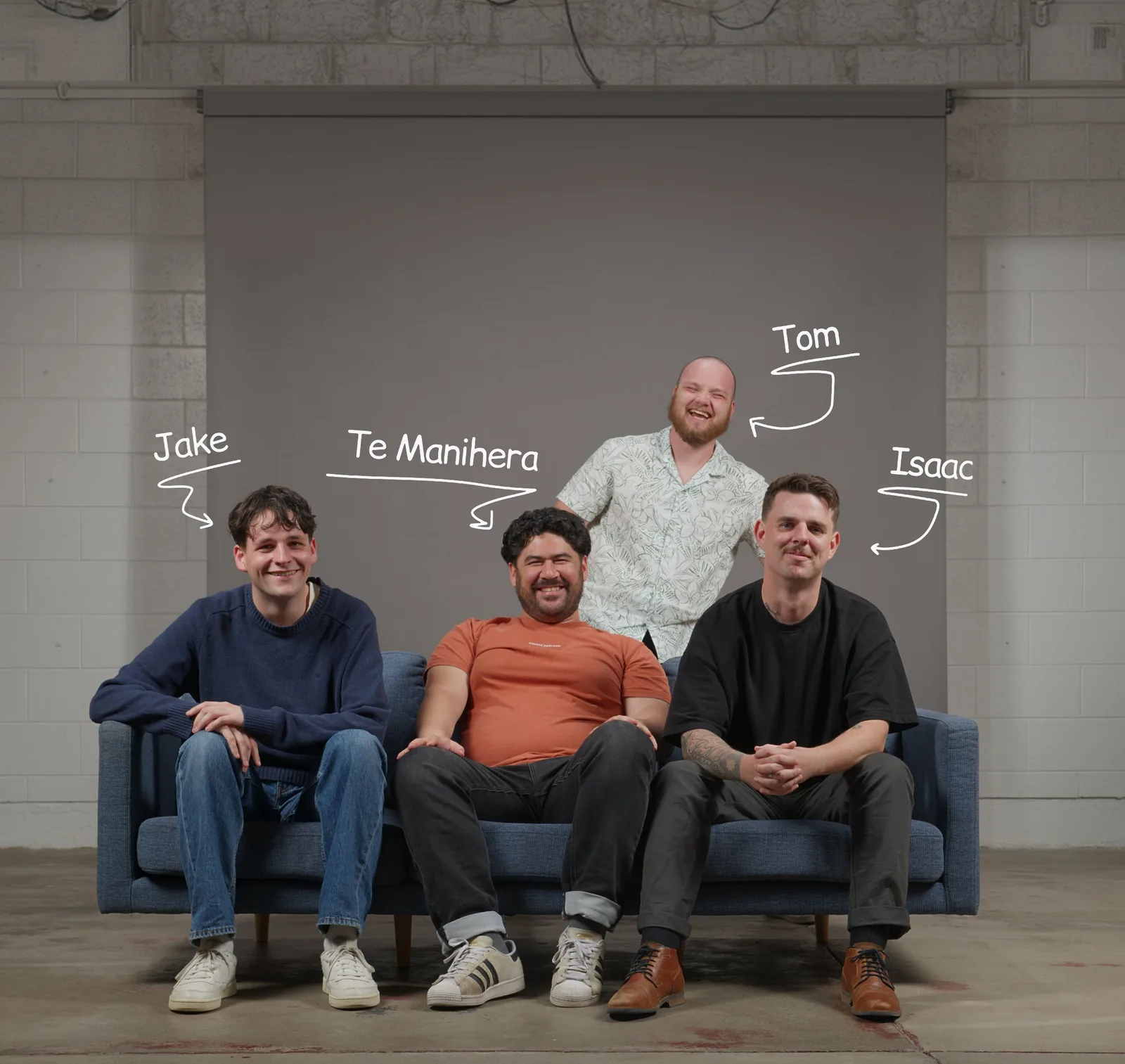
Studios that do both can design the identity knowing where it needs to live. What IF Web, a Webflow Premium Partner on St Asaph Street in Christchurch, is one of a small number of New Zealand studios doing identity and website together as one engagement. Thomas Hendrikz leads the design side, Isaac Farrow leads Webflow development. For Scalecraft, that was the full brand identity and the website in one project. For NextMinute, it was taking a fresh brand through a design system, homepage, app store assets, convention backdrops and social, all built together.
One supplier isn't right for everyone. A product business that lives on supermarket shelves gets more from a packaging-strong studio than a combined brand and web team. If you already have web developers you trust, a pure brand studio with a solid handover works fine. The practical test is to ask the brand studio to show you a live website carrying one of their identities. If the live site is weaker than the brand guidelines document, you've found the problem.
What are the red flags when hiring a brand identity designer?
Showing you a logo in week one. Means they skipped discovery and the logo is a guess. A good studio will not be ready to show marks until the strategy work is done.
A portfolio full of unnamed clients. Either the work is hypothetical or the studio cannot show the finished product. Either way, you cannot verify what they did or ask the client what the engagement was like.
No written process. If the proposal has no phases and no milestones for each stage, you are buying time and hoping for a result. The proposal is the first draft of the project, and a vague first draft usually hints at a vague project.
A fixed-price quote with no scope conversation. A fixed price without a scope conversation is a studio betting against the project. Either they will underservice to protect margin, or they will land you with a change order mid-project when the real scope turns up.
Templates sold as custom work. Some studios run the same identity framework across every client and the output starts looking suspiciously similar. Check three case studies back-to-back. If they feel like variations of the same system, they probably are.
Promises of SEO or AI search as part of the brand package. Brand identity and search visibility are different disciplines, and a studio promising both without a dedicated search specialist on the team is overselling at least one of them. If you want both, hire a brand studio and a search specialist, or hire a team that genuinely does both and can show you results for each.
For a shortlist of Christchurch brand studios we would send a mate to, our best branding agencies in Christchurch list is the next read. For how we approach brand and website as one engagement, our branding service page covers the process, and branding in Christchurch shows the local work.