The Objective
MoleMap is a skin cancer detection service with clinics across New Zealand and Australia. Melanographers image patients' skin, and dermatologists diagnose from those images.
Shane Potter, MoleMap's Head of Marketing, got in touch in May 2026 with an SEO audit his agency had just finished. He wanted a Webflow team who could work through it on both country sites, with conversion and online booking work to follow.
It didn't stay an SEO job for long. Once we were in the sites, the marketing team started bringing us their campaign work too.
What We Did
We started on the SEO audit. We fixed how the NZ and AU sites tell search engines which country version to show, got pages that had dropped out of the index back in, and fixed booking links that weren't working.
Map Your Future came next. MoleMap was launching a brand campaign on TV and billboards and needed a page to match. Shane sent the brief on a Tuesday. We built the page from sections already on the site so it could move fast, tried a few hero layouts around the campaign ad, and had Map Your Future live on both sites by Friday. A few weeks later we worked with MoleMap's SEO partner to add local skin cancer and UV content to the Australian page and the New Zealand version.
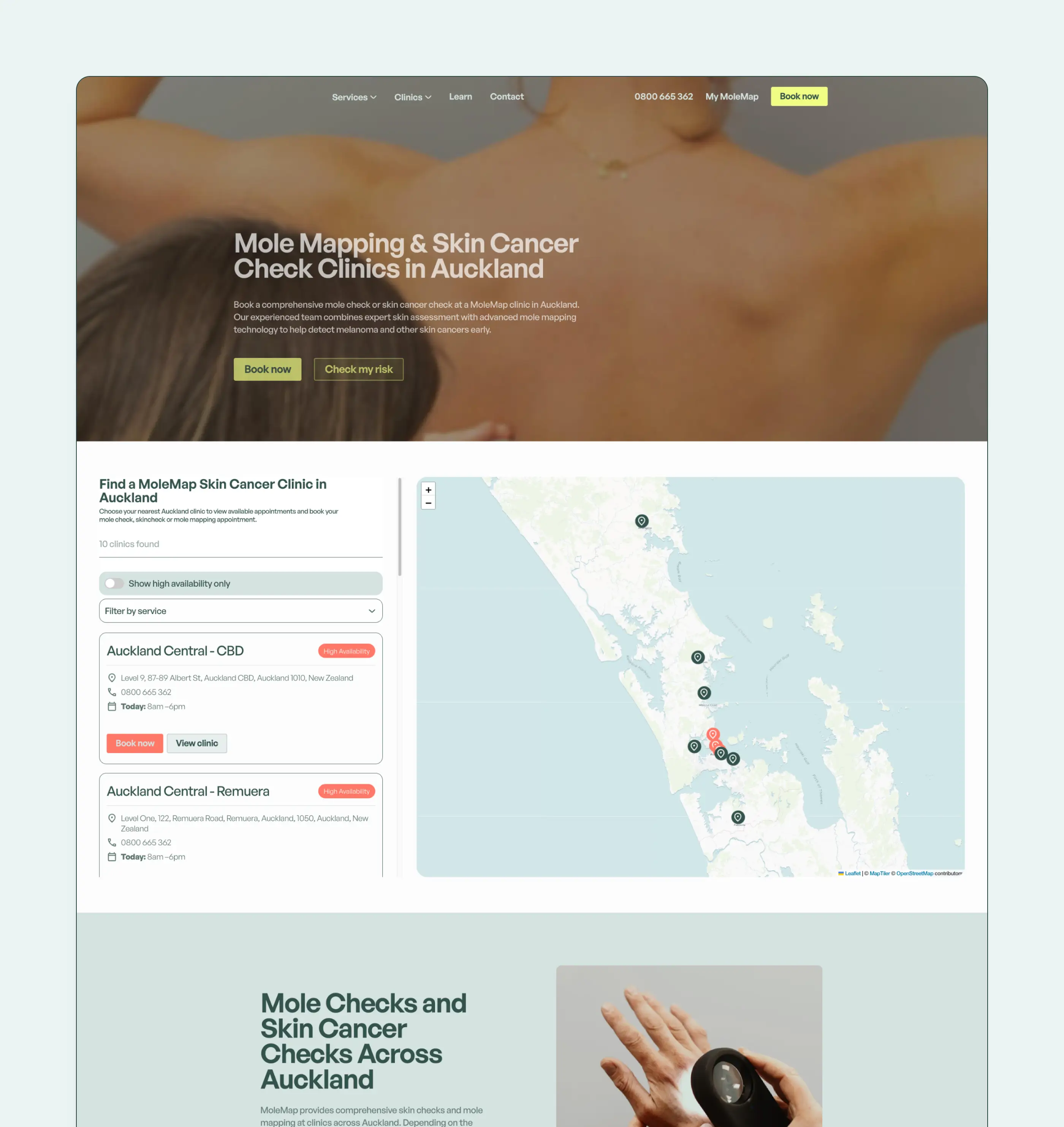
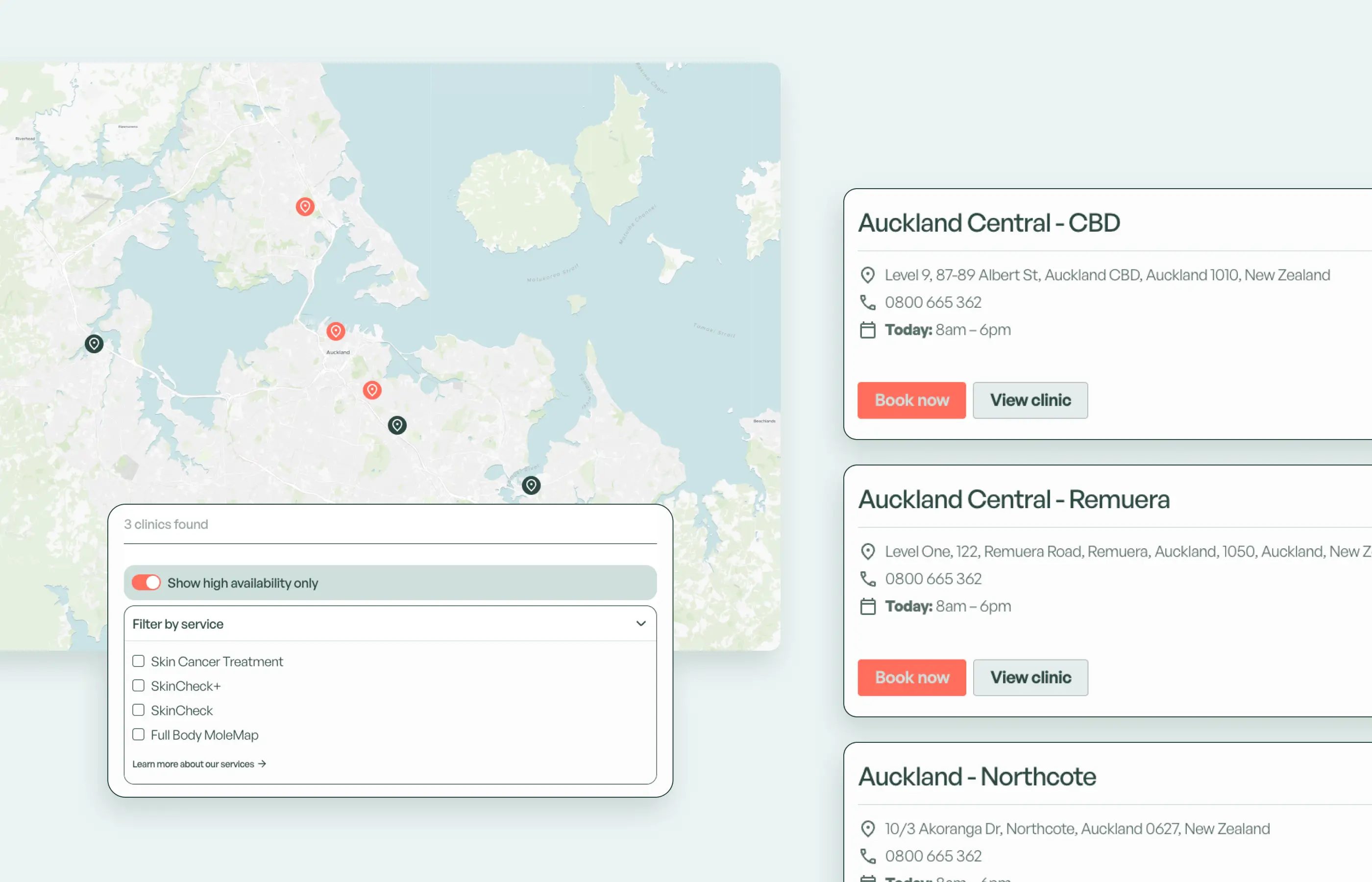
The Auckland clinic locator is the piece we're proudest of. MoleMap had more capacity at some Auckland clinics than others, and patients had no easy way to see where they could get in. Shane wanted to steer bookings toward those clinics without taking away anyone's choice.
We worked it through with MoleMap's SEO and paid media partners before building anything. What we built is a map and clinic list that sit side by side. The marketing team can flag a clinic as High Availability in the CMS, and it gets its own pin colour and moves to the top of the list. Tap a pin and you get the address, phone number, hours and a book button. Everything on the map is also in the page's HTML, so search engines can read it. The availability flag is set by hand for now, but if MoleMap connects its booking system later, the same field is ready to take that data.
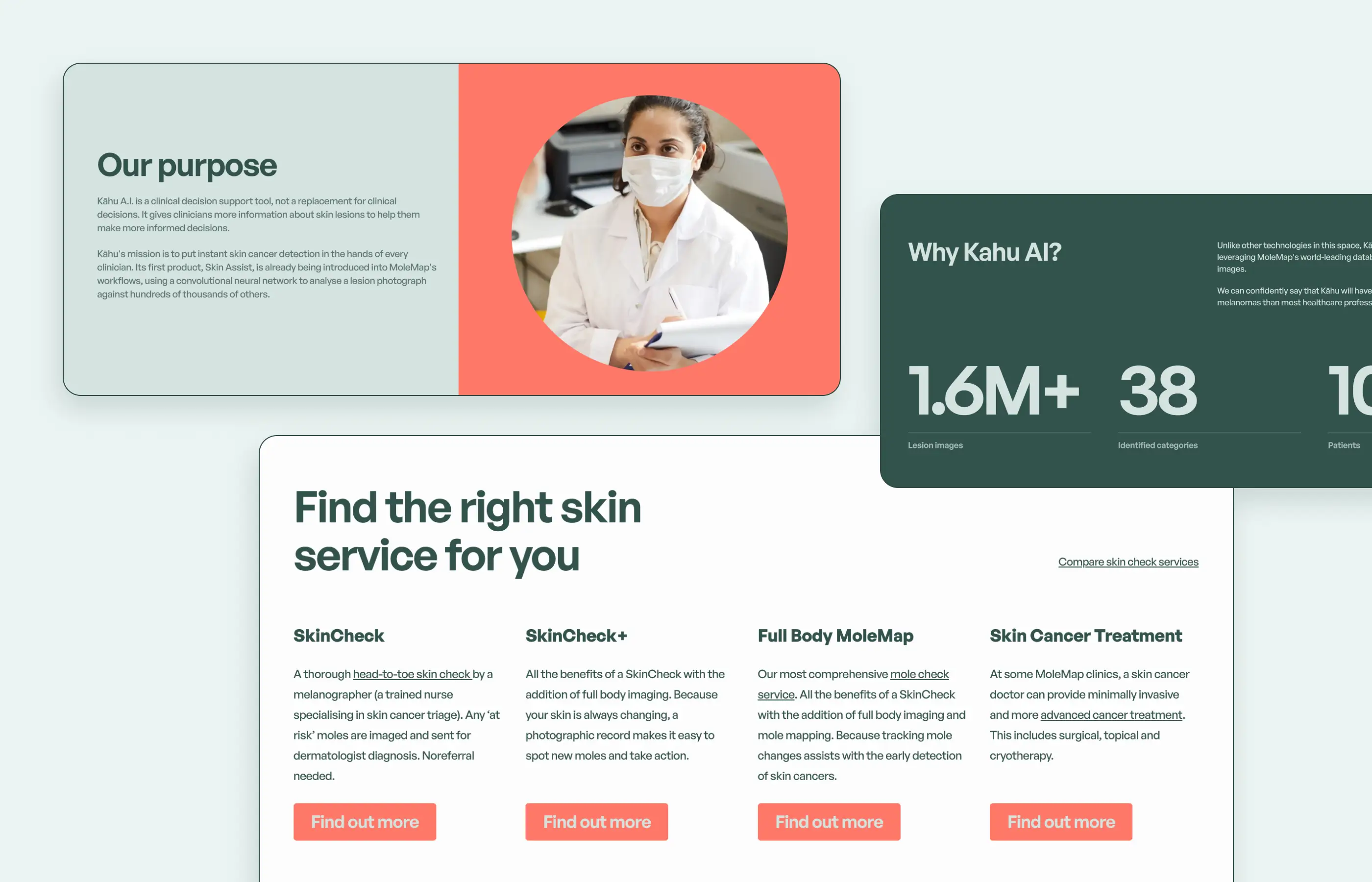
We also moved Kāhu AI, MoleMap's AI clinical decision support tool, off its own standalone website. Working from MoleMap's content, our design team designed the page and we built its new home on the NZ site. We then mapped every page of the old site so the Kāhu AI domain now redirects across.
The most recent brief came from MoleMap's lifecycle marketing team. They run a new offer by email every month, and those emails were sending people to the homepage or straight into the booking form, with nothing in between to explain the services or the deal.
We could have built them a landing page and then done it all again next month. So we built a campaign template on both sites instead. Now the team can start a new page, pick the sections they need and write their own copy. The first one out was a 20% off spring offer, where the service comparison pulls prices from the CMS so the discount sits right next to the full price.

"The What IF Web team are a great asset to help our business achieve our website goals. They provide timely insight and advice and are proactive in getting projects done. Would recommend them to anyone looking for website design or development resources."

The Result
In six months the work has moved from an SEO audit to the pages MoleMap's marketing actually runs on. The Auckland clinic locator is now where MoleMap sends its Auckland paid search and social traffic, and Kāhu AI sits on the main site instead of on a separate domain.
The lifecycle team can now put together a page for next month's offer without waiting on a developer, and when they'd rather hand it over, we can turn it around quickly. We're still working with MoleMap across both sites, picking up new briefs as their campaigns roll out.